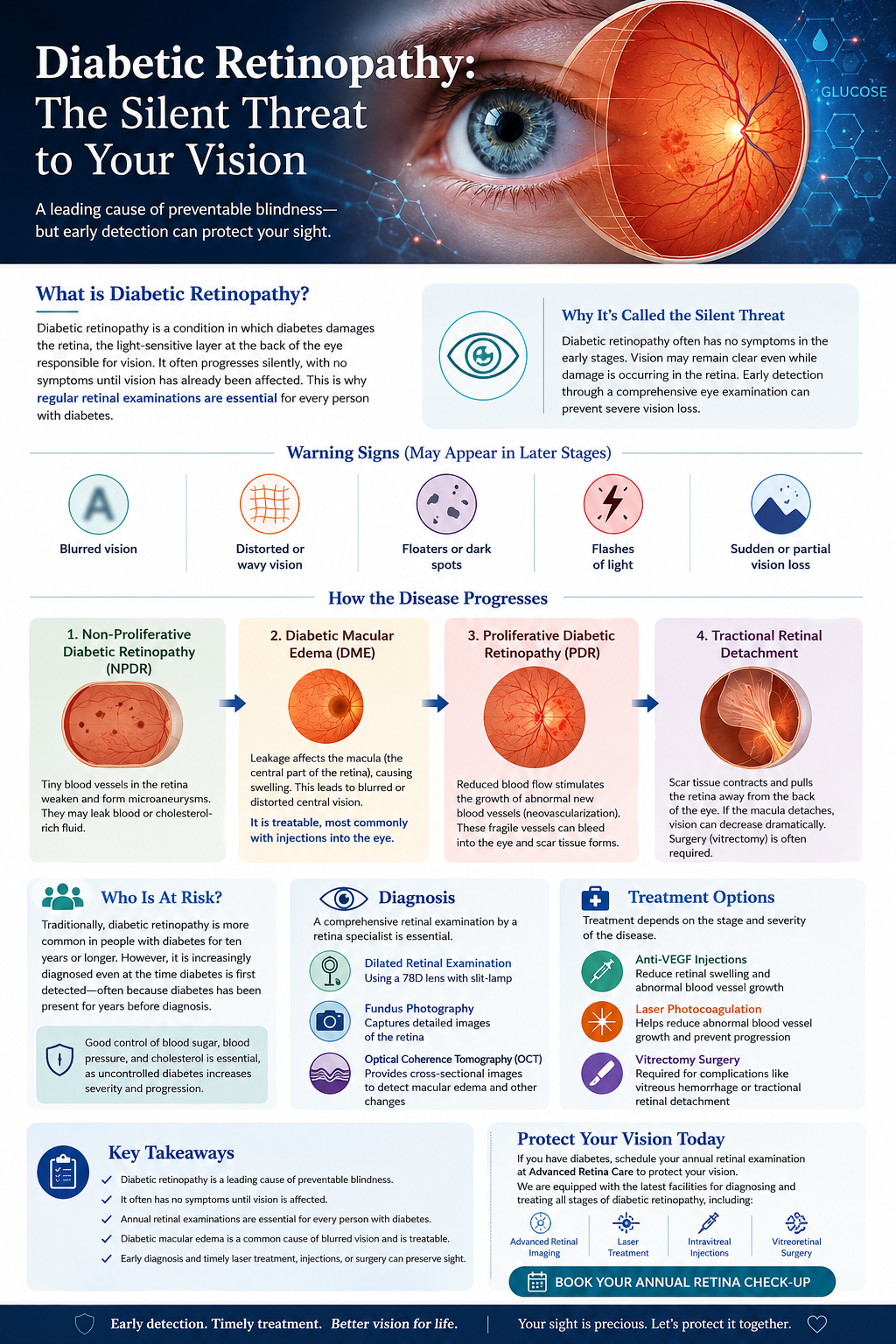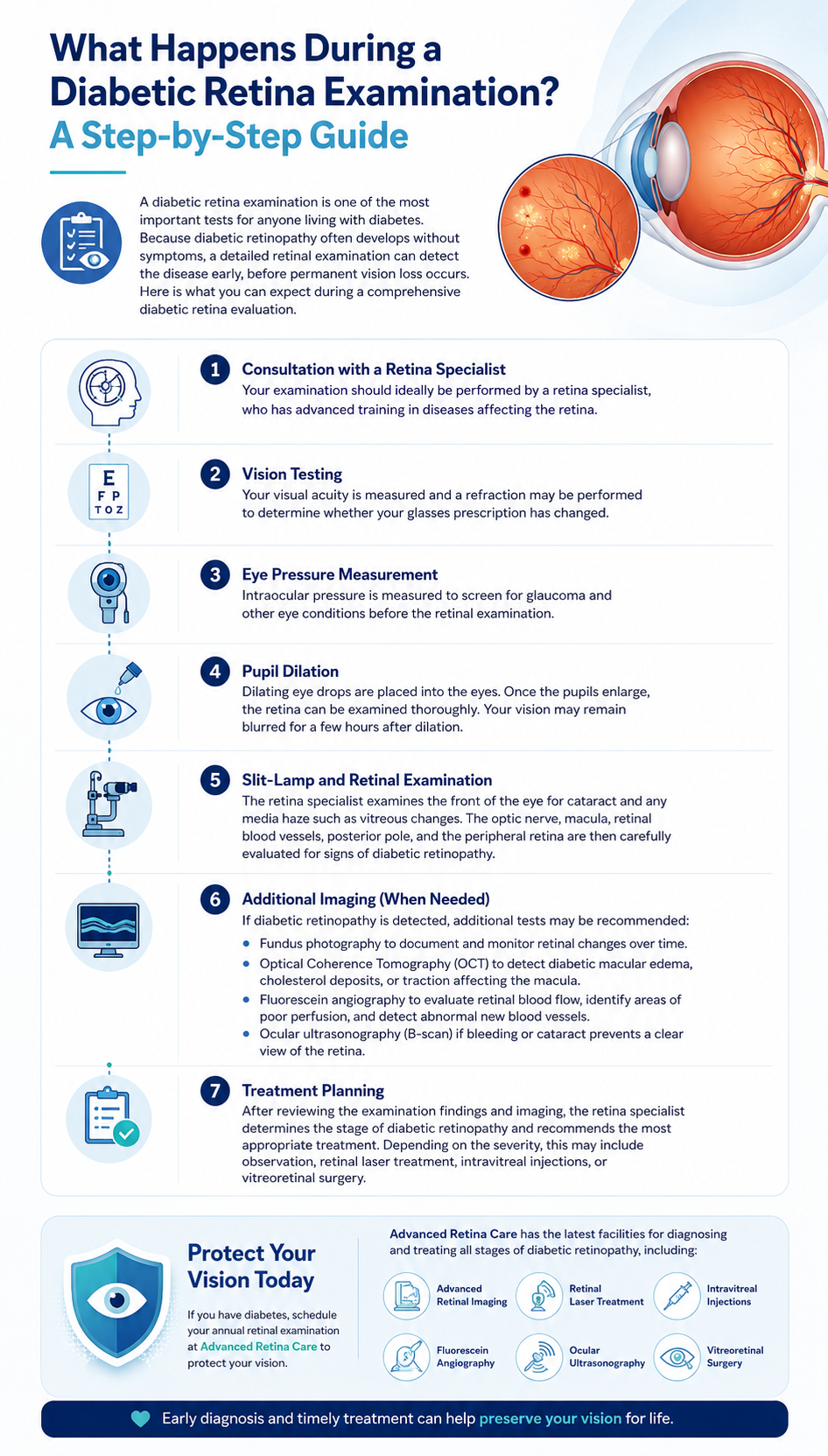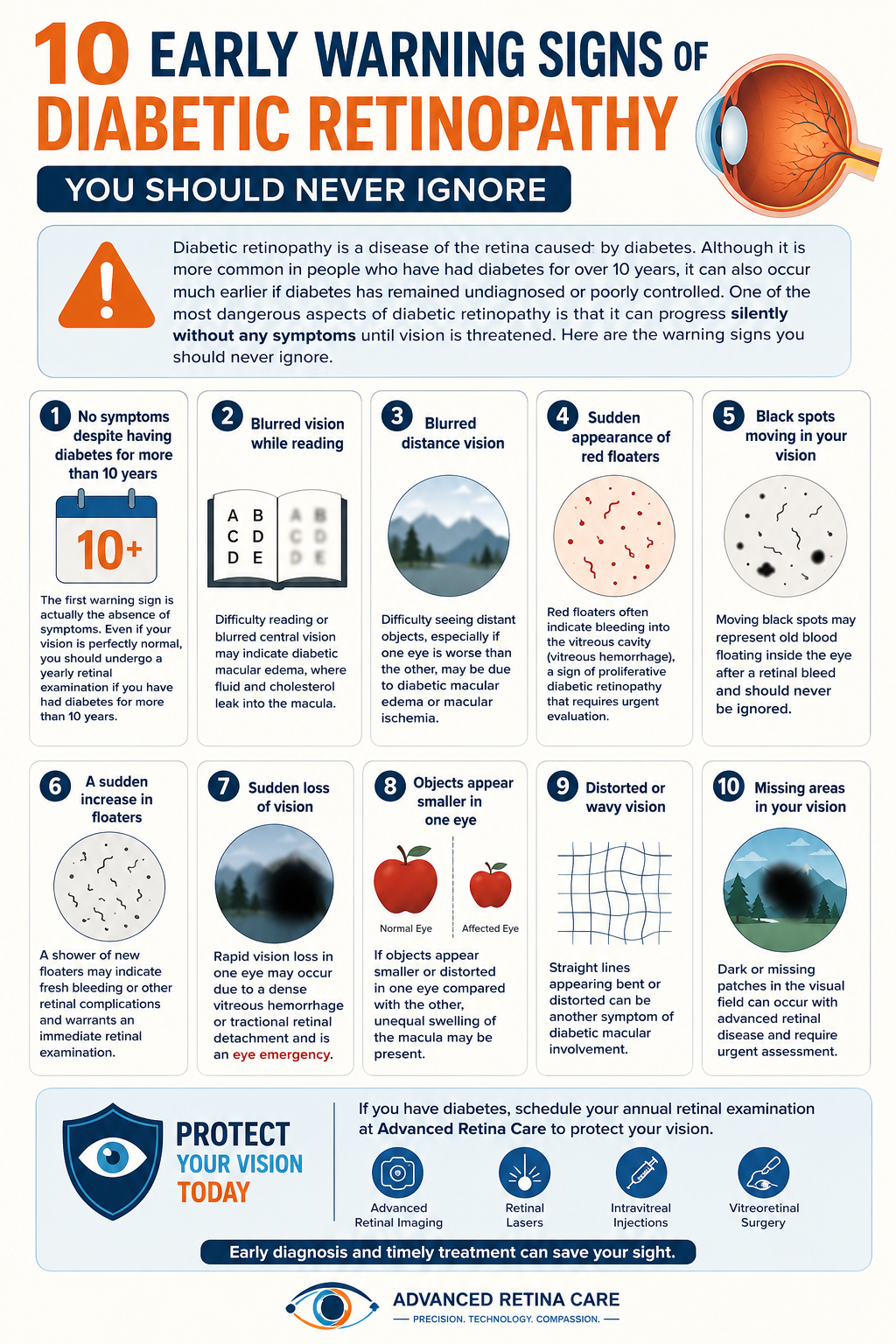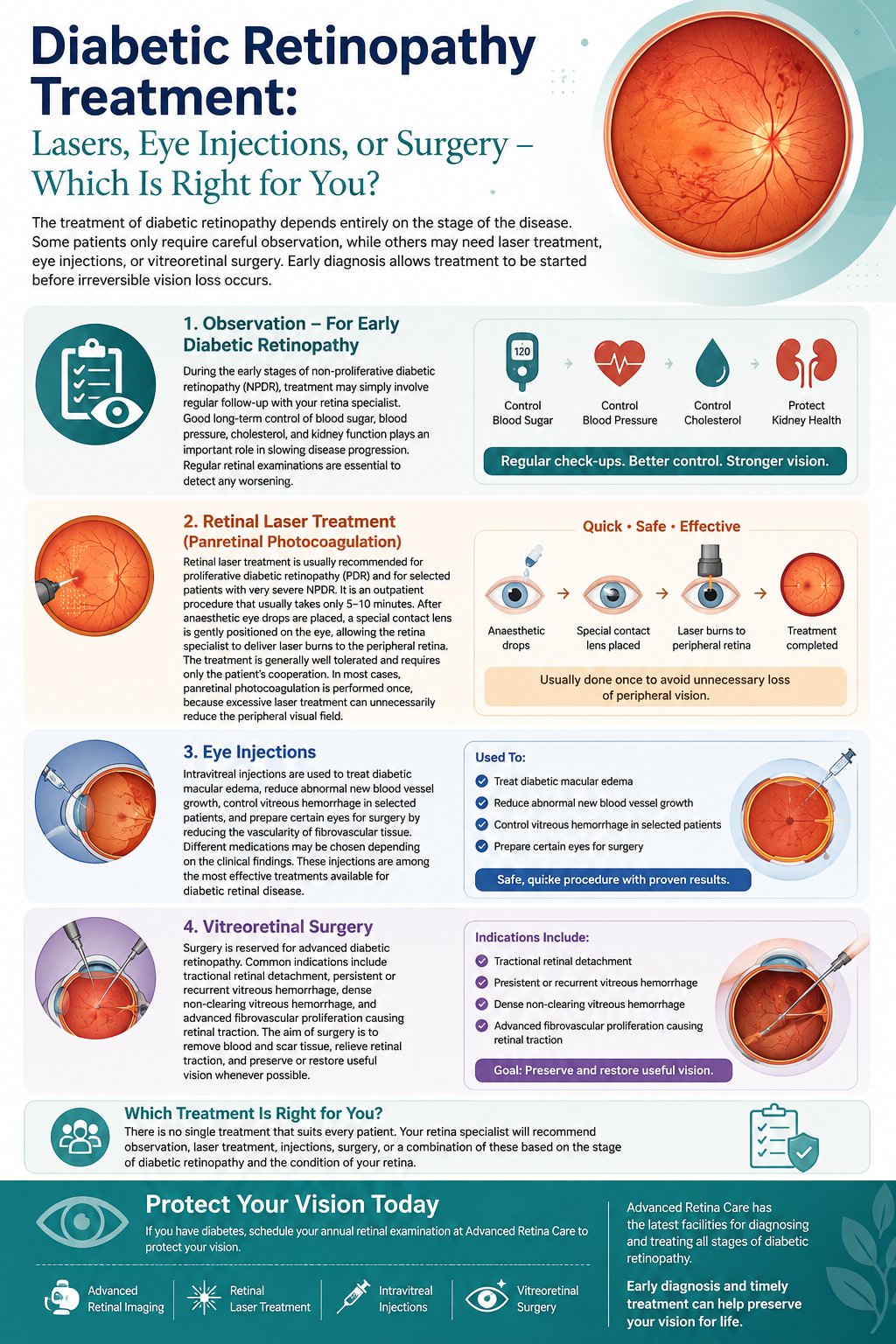
Diabetic retinopathy is a major microvascular complication affecting the retina—the light-sensitive layer at the back of the eye that captures images and transmits them to the brain. In people with diabetes, prolonged high blood sugar weakens tiny retinal blood vessels. Over time, these vessels may leak fluid, bleed, or become blocked, depriving the retina of vital oxygen and potentially leading to permanent blindness if left untreated.
What Causes Diabetic Retinopathy?
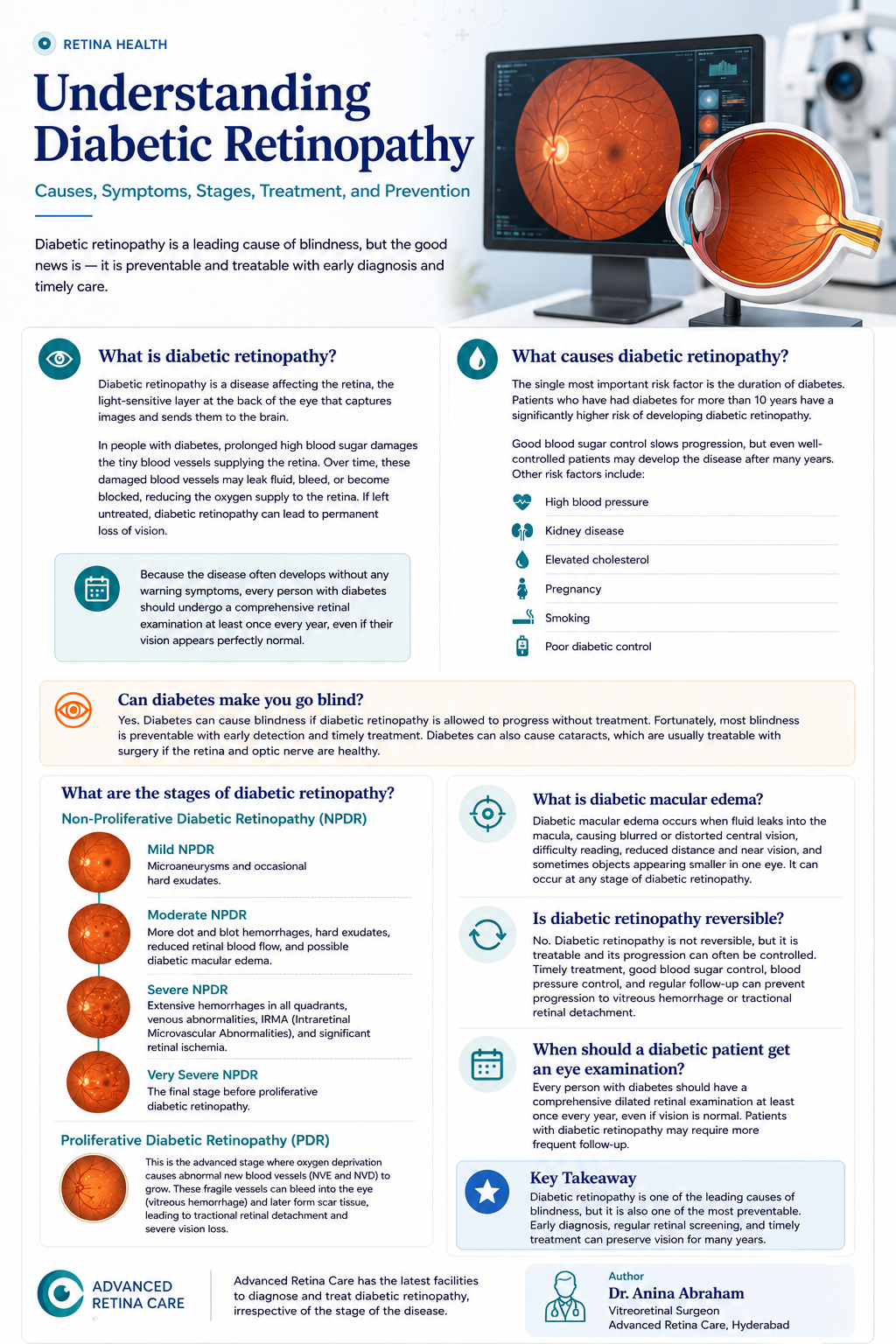
The single most significant risk factor for developing diabetic retinopathy is the duration of diabetes. Patients who have lived with diabetes for more than 10 years face a substantially higher likelihood of microvascular retinal changes. While strict blood sugar control slows progression, even patients with well-controlled blood sugar can develop retinal changes after many years. Key compounding risk factors include:
- Uncontrolled blood glucose levels (elevated HbA1c)
- High blood pressure (hypertension)
- Kidney disease (diabetic nephropathy)
- Elevated cholesterol and triglyceride levels
- Pregnancy in diabetic women
- Tobacco smoking and lifestyle stress
Can Diabetes Make You Go Blind?
Yes. Diabetes is the leading cause of preventable blindness among working-age adults. If diabetic retinopathy progresses without early diagnosis and clinical intervention, severe bleeding (vitreous hemorrhage) or scar tissue traction (retinal detachment) can cause permanent loss of sight. Fortunately, with early annual screening and timely treatment, up to 90% of diabetes-related blindness is entirely preventable.
The Stages of Diabetic Retinopathy
Diabetic retinopathy progresses gradually through distinct clinical stages:
1. Non-Proliferative Diabetic Retinopathy (NPDR)
NPDR is the early to moderate stage of retinal disease, categorized by:
- Mild NPDR: Microaneurysms (tiny balloon-like bulges in retinal capillaries) and occasional hard exudates.
- Moderate NPDR: Increasing dot-and-blot hemorrhages, venous dilation, and reduced microvascular perfusion.
- Severe NPDR: Extensive hemorrhages in all 4 quadrants, intraretinal microvascular abnormalities (IRMA), and severe retinal ischemia.
- Very Severe NPDR: The critical transition stage prior to abnormal new vessel growth.
2. Proliferative Diabetic Retinopathy (PDR)
PDR is the advanced stage triggered by severe retinal oxygen deprivation. In response, fragile abnormal new blood vessels grow on the retina or optic nerve (NVE/NVD). These delicate vessels bleed easily into the vitreous gel and form scar tissue, leading to tractional retinal detachment.
What is Diabetic Macular Edema (DME)?
Diabetic Macular Edema occurs when damaged capillaries leak fluid, protein, and lipids into the macula—the central part of the retina responsible for detailed sharp vision. DME can occur at any stage of NPDR or PDR, causing blurred central vision, difficulty reading fine print, distorted lines, and objects appearing smaller in one eye.
Is Diabetic Retinopathy Reversible?
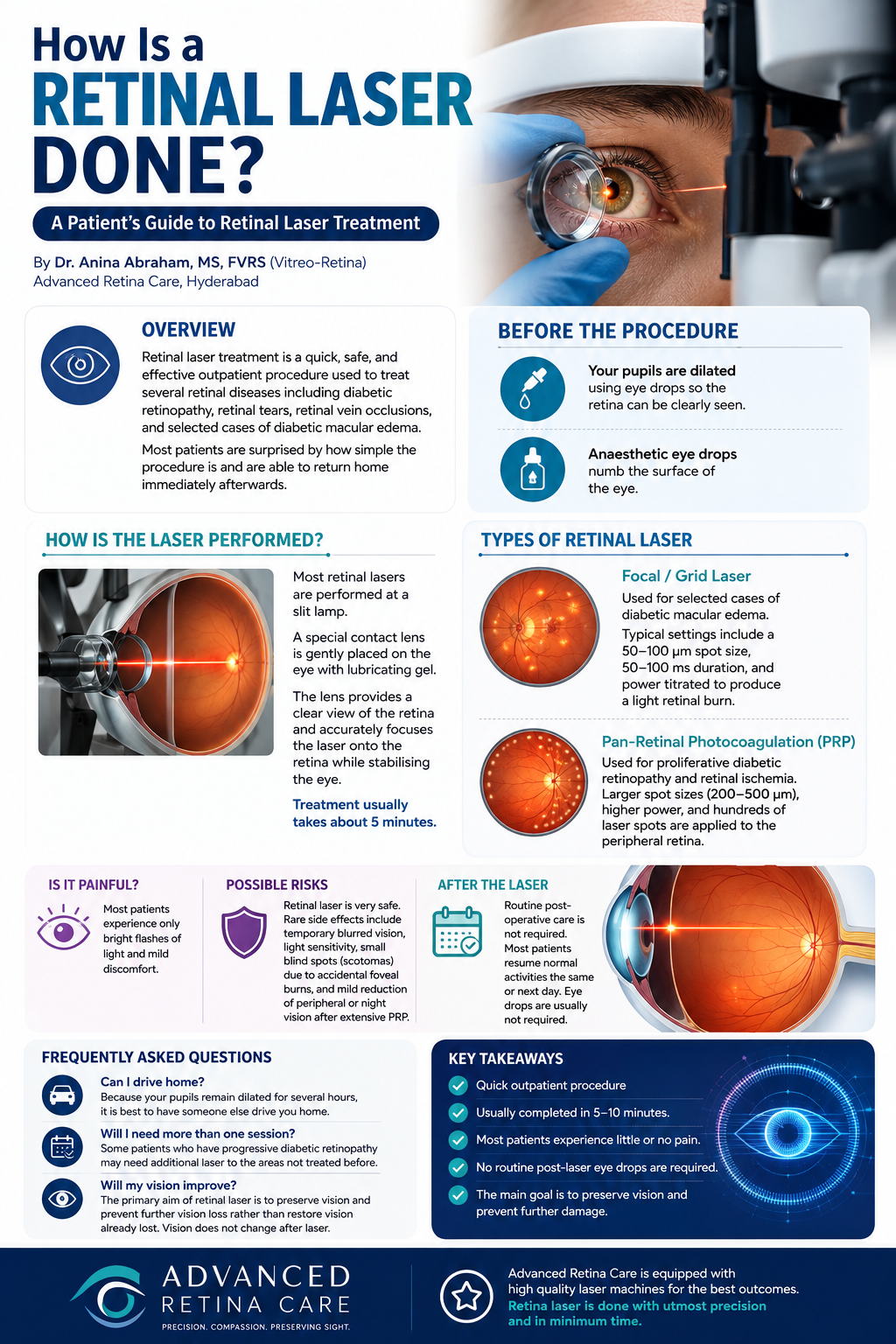
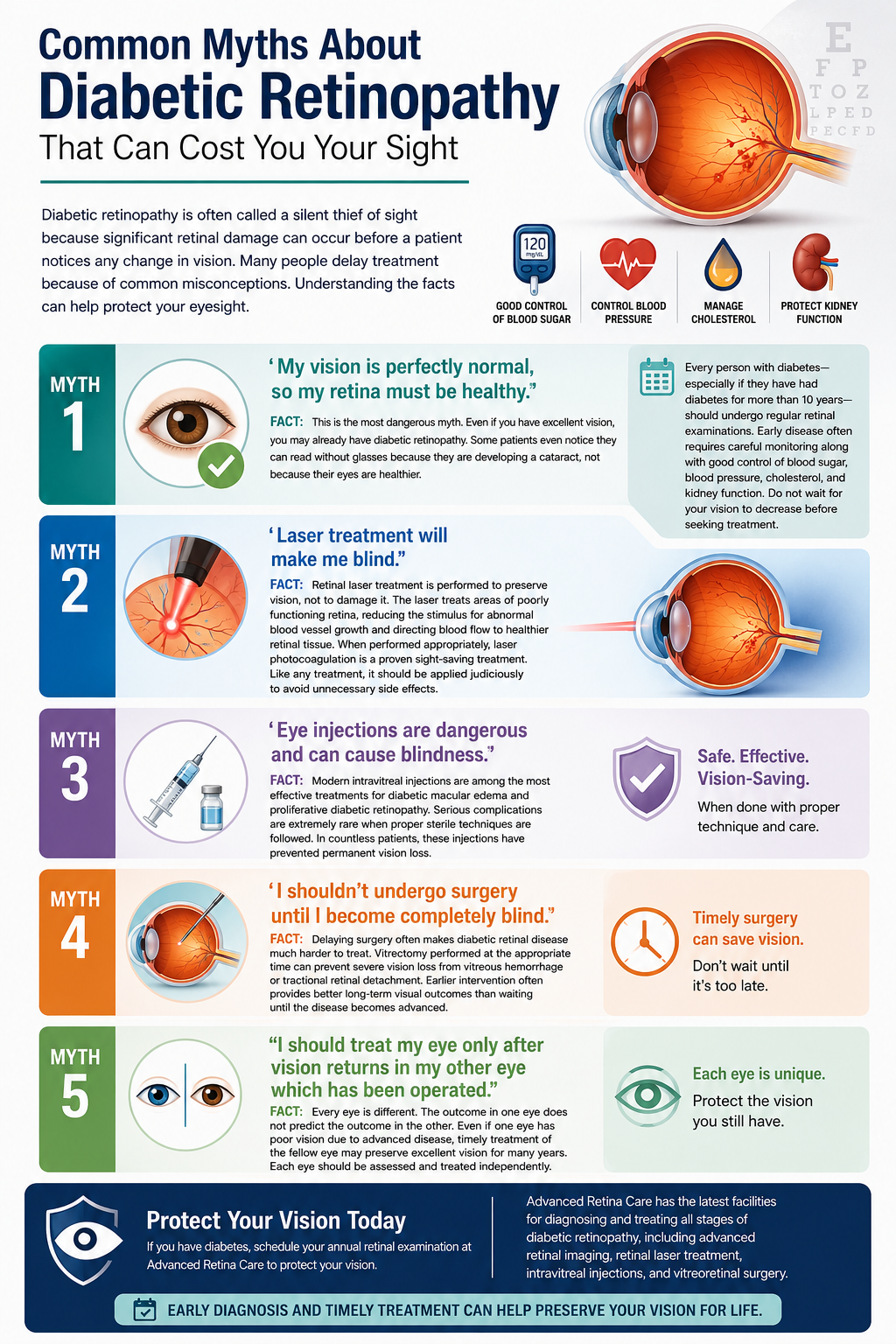
No. Existing structural damage to retinal blood vessels is not naturally reversible. However, it is highly treatable and manageable. Timely treatment—including panretinal laser photocoagulation, intravitreal Anti-VEGF injections, and vitrectomy surgery—can halt disease progression, reduce swelling, and preserve useful vision for life.
When Should You Get Screened?
Every individual diagnosed with diabetes should undergo a comprehensive, dilated eye examination by a Vitreo-Retina specialist at least once every year, even if visual acuity feels completely normal.
In-Depth Patient Educational Articles & Guides
Explore our comprehensive topics on diabetic eye health written by Dr. Anina Abraham: